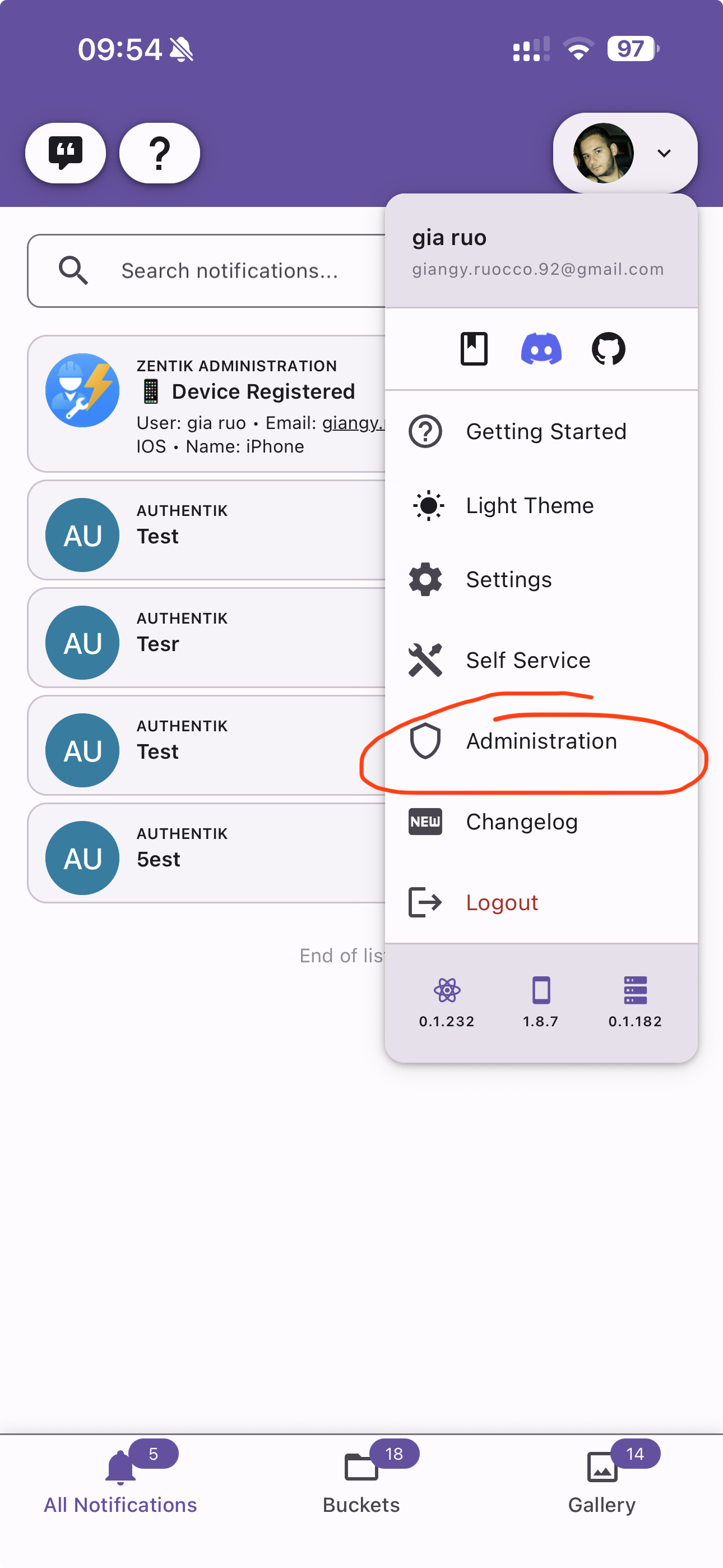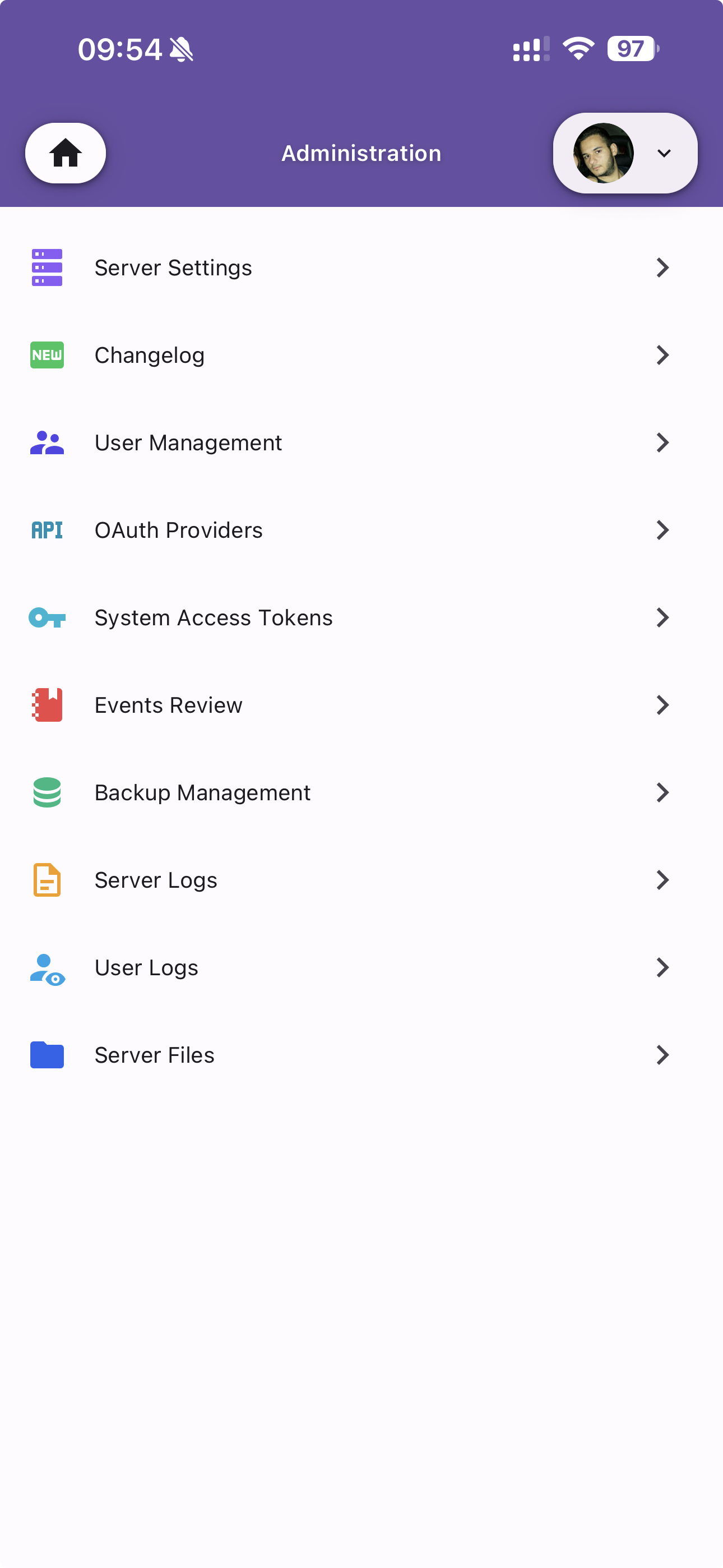
Settings
Environment variables
The following environment variables can be configured in the backend .env file:
Database
DB_SYNCHRONIZE- Enable automatic schema synchronization (development only, default:false)DB_DROP_SCHEMA- Drop existing schema on startup (default:false)DB_USERNAME- Database username (default:zentik_user)DB_PASSWORD- Database password (default:zentik_password)DB_NAME- Database name (default:zentik)DB_HOST- Database host (default:localhost)DB_PORT- Database port (default:5432)DB_SSL- Enable SSL connection (default:false)
Server Configuration
PUBLIC_BACKEND_URL- Public backend URL
Administration
ADMIN_USERS- Comma-separated list of administrator users (default:admin)ADMIN_DEFAULT_PASSWORD- Default password for administrator users (default:admin)
Server settings
In addition to environment variables, Zentik provides a wide range of configurable settings through the ServerSetting entity. These settings are stored in the database and can be fully configured through the admin UI or GraphQL API.
Authentication & JWT
Configuration for JWT tokens and user authentication:
JwtAccessTokenExpiration- Duration for access token validity (default:3h)JwtRefreshTokenExpiration- Duration for refresh token validity (default:7d)JwtSecret- Secret key for JWT access tokens (auto-generated)JwtRefreshSecret- Secret key for JWT refresh tokens (auto-generated)SocialLoginEnabled- Enable social login functionality (default:false), oauth providers will need to be setup in the proper administration sectionLocalRegistrationEnabled- Enable local user registration via email/password (default:false)SocialRegistrationEnabled- Enable social registration functionality (default:false). If disabled, oauth providers can be used only for the login following a local registration
Apple Push Notification (APN)
Configuration for Apple Push Notifications. All these configurations will require the mobile app to be built locally with the whole Apple setup. Request a passthrough token and set ApnPush to Passthrough to utilize the public server:
ApnPush- APN push mode:Off,Local,Onboard,Passthrough(default:Off)ApnKeyId- Apple Push Notification Key ID (required forOnboardmode)ApnTeamId- Apple Team ID (required forOnboardmode)ApnPrivateKeyPath- Path to APN private key file (required forOnboardmode)ApnBundleId- App bundle identifier (required forOnboardmode)ApnProduction- Use production APN environment (default:true)
Firebase Cloud Messaging (FCM)
Configuration for Firebase push notifications. All these configurations will require the mobile app to be built locally with the whole FCM setup. Request a passthrough token and set FirebasePush to Passthrough to utilize the public server:
FirebasePush- Firebase push mode:Off,Local,Onboard,Passthrough(default:Off)FirebaseProjectId- Firebase project ID (required forOnboardmode)FirebasePrivateKey- Firebase service account private key (required forOnboardmode)FirebaseClientEmail- Firebase service account client email (required forOnboardmode)
Web Push Notification
Configuration for web push notifications:
WebPush- Web push mode:Off,Local,Onboard,Passthrough(default:Onboard)VapidSubject- VAPID subject for web push (required forOnboardmode, default tomailto:zentik@notifier.com)
Push Passthrough
Configuration for push notification passthrough service:
PushNotificationsPassthroughServer- Passthrough server URL (default:https://notifier-api.zentik.app/api/v1)PushPassthroughToken- Authentication token for passthrough serviceSystemTokenUsageStats- System token usage statistics (JSON format). Contains the montly calls left to the requested token
Changelog
Configuration for fetching changelog entries from a remote Zentik backend:
ChangelogRemoteServer- Base URL of the remote backend used to serve changelogs (should include the API prefix, e.g.https://notifier-api.zentik.app/api/v1). When set, the public/changelogsendpoints on this instance proxy reads to that remote server first and fall back to the local database if the remote is unavailable.
Email Configuration
Configuration for email notifications. The server can send emails for the various auth flows and some more events. It supports out of the box a generig SMTP (Brevo is very easy to setup with a good free tier) or Resend as HTTP protocol
EmailEnabled- Enable email functionality (default:false)EmailFrom- Sender email addressEmailFromName- Sender display nameEmailType- Email service type:SMTP,Resend(default:SMTP)EmailHost- SMTP server host (for SMTP type)EmailPort- SMTP server port (for SMTP type)EmailSecure- Use secure SMTP connection (for SMTP type)EmailUser- SMTP username (for SMTP type)EmailPass- SMTP password (for SMTP type)ResendApiKey- Resend service API key (for Resend type)
Attachments
Configuration for file attachments:
AttachmentsEnabled- Enable attachment functionality (default:false)IconUploaderEnabled- Enable icon upload feature (default:true)AttachmentsStoragePath- File storage path for attachments (default:/attachments)AttachmentsMaxFileSize- Maximum file size in bytes (default:10485760- 10MB)AttachmentsAllowedMimeTypes- Comma-separated list of allowed MIME typesAttachmentsDeleteJobEnabled- Enable automatic cleanup of old attachments (default:true)AttachmentsMaxAge- Maximum age for attachments before cleanup (default:7d)
Database Backup
Configuration for automated database backups:
BackupEnabled- Enable automatic database backups (default:false)BackupExecuteOnStart- Execute backup on server startup (default:true)BackupStoragePath- Directory for backup files (default:/backups)BackupMaxToKeep- Maximum number of backup files to retain (default:10)BackupCronJob- Cron expression for backup schedule (default:0 */12 * * *- every 12 hours)
Server Files
Configuration for server file storage. Utility to handle files stored on backend, i.e. keys for notification providers
ServerFilesDirectory- Directory for server files (default:/data)
Messages Retention
Configuration for message cleanup:
MessagesDeleteJobEnabled- Enable automatic message cleanup (default:true)MessagesMaxAge- Maximum age for messages before cleanup (default:7d)
Rate Limiting
Configuration for API rate limiting. Needed when the server runs behind a proxy server to avoid limiting of the clients, which will be recognized by the same proxy IP
RateLimitTrustProxyEnabled- Trust proxy headers for rate limitingRateLimitForwardHeader- Header to use for forwarded IP addressesRateLimitTtlMs- Rate limit window duration in milliseconds (default:60000- 1 minute)RateLimitLimit- Maximum requests per window (default:100)RateLimitBlockMs- Block duration after limit exceeded in milliseconds (default:10000- 10 seconds)RateLimitMessagesRps- Messages per second rate limit (default:10)RateLimitMessagesTtlMs- Messages rate limit window in milliseconds (default:1000- 1 second)
CORS & Security
Configuration for Cross-Origin Resource Sharing:
CorsOrigin- Allowed CORS origins (comma-separated)CorsCredentials- Allow credentials in CORS requests
Logging
Configuration for application logging:
LogLevel- Logging level (debug, info, warn, error)
Log Storage
Configuration for log storage and retention:
LogStorageEnabled- Enable log storage to databaseLogRetentionDays- Number of days to retain logs
Prometheus Metrics
Configuration for metrics collection, exposes a /metrics endpoint. Generate a system token with prometheus to authorize the pull.
PrometheusEnabled- Enable Prometheus metrics endpoint (default:false)
System Access Tokens
Configuration for system-level access tokens:
EnableSystemTokenRequests- Enable system token request functionality (default:false)